Beyond the Calendar: Why Senior Living Engagement Is Becoming More Personal
By Nicole Will, Rendever | October 2, 2026
Disclaimer: The views and opinions expressed in this guest column are those of the author and do not necessarily reflect the official policy or position of Senior Living News. The author may have an interest in the products, services or business entities referenced in this article. Senior Living News is not responsible for the opinions or factual assertions made by the author.
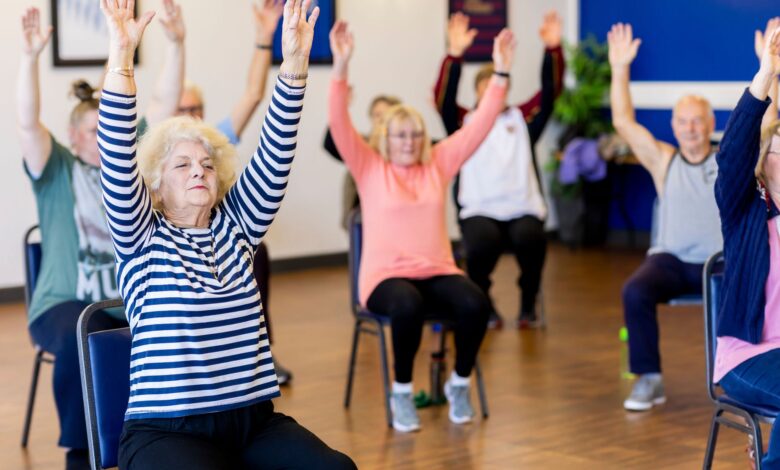
For decades, activity programming in senior living followed a familiar rhythm. A calendar was posted near the elevator or the dining room, filled with the same rotating list of offerings: bingo on Tuesday, chair yoga on Wednesday, a movie Thursday night, a birthday party for everyone born that month – whether or not they wanted to celebrate together.
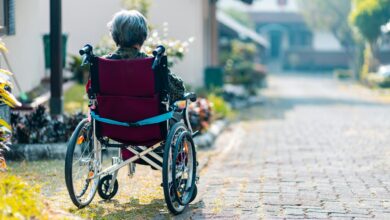
Over time, that model revealed its limits, leaving residents feeling uninspired to join in and growing more isolated behind closed doors, even while living within a community full of people.
That disengagement and social isolation carry real weight. According to a report from the National Academies of Sciences, Engineering and Medicine, 43% of American adults 60 and older are lonely and roughly a quarter of community-dwelling 65 and older are socially isolated, a condition the CDC has linked to higher rates of heart disease, stroke, depression and anxiety. Moving into a senior living community does not automatically relieve that isolation. In the early months, when a new resident hasn’t had the chance to cultivate a single friendship, social isolation can easily deepen.
New residents carry a particular kind of vulnerability into this equation, one that is easy to overlook amid move-in logistics and paperwork. A person arriving at a community for the first time has usually just left a home, a neighborhood, sometimes a spouse and is walking into a building full of people they’ve never met. Care teams become the facilitators of relationships. Without someone actively working to connect that resident to others who might genuinely matter to them, months can pass without a single real relationship forming. Closing that gap is a core part of intentional, empathetic programming.
To address this, senior living communities are shifting toward activity programming that is rooted less in the activities and focused more on how they’re offered. What moves a resident from watching community activities from their doorway to actually walking into the hallway and joining the other residents rarely has much to do with the activities themselves. Rather, it depends on whether that resident personally feels wanted there. Directors and life engagement teams are noticing the real difference between posting that an activity is happening and telling a resident — personally and by name — that it won’t feel the same without them there.
In some communities, having the staff spend thirty minutes going door to door before every single program is treated as non-negotiable. Leadership understands that a posted schedule, however clearly written, is never going to do what a person walking down a hallway and personally engaging a resident could do. Still, many communities don’t have the staffing to do this, despite the best of intentions. That means communities nationwide need to explore opportunities to rebuild their whole approach around the idea that residents respond to being seen and wanted, not merely to being informed.
As care teams rethink how they engage residents, the activities on a program calendar are also changing. For the most part, activities remain in rotation out of habit, but more frequently, activity directors are seeing opportunities to revive their programming to build something meaningful for each resident, rather than filling a slot simply because it’s always been there.
Technology can help teams see those patterns more clearly. A social health platform or engagement dashboard might show not only that an activity had low attendance, but who participated, which residents regularly engage together, what interests they share, and who may not be participating at all. Instead of simply repeating or retiring an activity based on attendance, teams can use those insights to ask better questions: Why are certain residents showing up? Who are we not reaching? Are there shared interests that could bring a different group of people together?
Rendever is one example of how technology can support that process. Its virtual reality programming includes experiences such as travel, music, history and exploration that can become a starting point for broader programming. A virtual trip to Italy, for example, could lead to an Italian-themed day with food, music, art or conversations about residents’ own travels and memories. The technology isn’t the activity itself; it can be the spark that helps a team create more meaningful opportunities for residents to participate, connect and belong.
Digital tools are beginning to play a supporting role in this shift, particularly in surfacing which residents might genuinely connect with one another, something that has historically depended entirely on a staff member happening to notice a shared connection like a common hometown or hobby. Tools that help identify those overlaps for all residents in a community are becoming more available across the industry, but nothing replaces the moment a person walks into a room and extends the personalized invitation out loud.
Underneath all of it sits a bigger truth: Life engagement directors are the culture-setters of their communities. The role at its core is relationship-building with logistics and scheduling surrounding it. They are responsible for shaping what belonging actually feels like inside the walls.
The posted calendar of events isn’t disappearing from senior living anytime soon, and it doesn’t need to. Instead, the care industry is asking what that calendar is actually for and how to measure its success by something closer to connection than attendance rates. When that shift takes hold, residents stop merely attending their communities and instead begin to belong to them.