HEALTHTAC East 2026: The Impact of AI Within Our Industry & Communities
By Jacqui Barrineau | March 20, 2026
From the Senior Living News Newsroom
HEALTHTAC East 2026 kicked off March 8 in Fort Myers, Fla., with emcee Kelly Cardenas setting an opening-night tone: real relationships, not rote networking, would drive the conversations to come. Cardenas, a three-decade convention veteran, challenged attendees to look people in the eye, remember names and “make a friend out of everyone.” It was a theme that carried forward through the event’s sessions, including the next morning’s deep-dive panel on AI’s evolving role in senior living.
Throughout the session, the panel kept returning to one point: AI is already shaping resident engagement, operations and care in senior living, but its value depends on how thoughtfully communities use it. That means training staff, listening to residents, vetting products carefully and using the technology to support people rather than replace them.
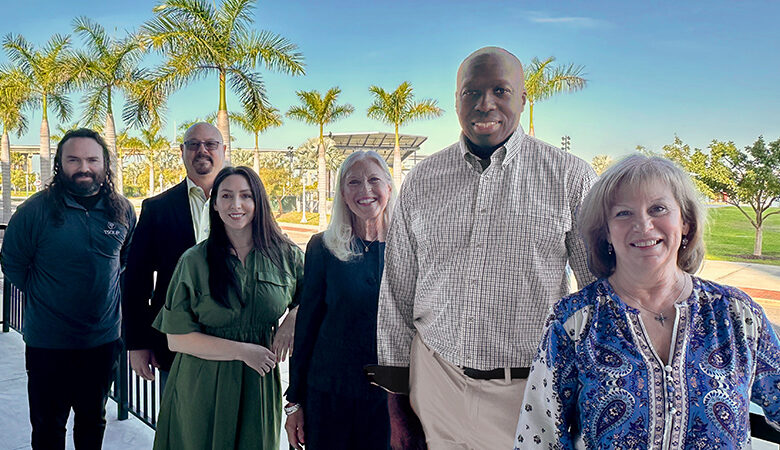
Verna Chisman, president of Allure Wellness Management Services, moderated the discussion, which examined how AI is emerging as crucial infrastructure that helps develop better care strategies, resident engagement and facility operations. Joining Chisman on stage were:
- Brian Browne, president and CEO of Cognitive Care Management
- Ashlie Burnett, director of community life services at the Heritage at Brentwood
- Stacey Judge, director of community wellness programs at Springpoint Senior Living
- Bill Pickhardt, vice president of regional operations at Lifespace Communities
- David Sawyer, CEO and founder of TSOLife
Chisman kicked off the roundtable-style discussion by asking the panelists about the areas where they believe AI has had the greatest impact on senior living.
“AI has had a clear impact in terms of it being a decision-making tool,” Browne said. “It should not, at this point, replace real people. It’s a great tool to anticipate, to dig for more knowledge and … really amalgamate a lot of sources into the decision-making.”
Sawyer agreed. “What AI is exceptionally good at is taking a lot of massive data streams and funneling it into easy ways to analyze it,” he said. “What it isn’t always very good at is knowing what the data is meant to say after the fact.”
Pickhardt expanded on these points, noting that his organization had seen “huge cost savings” for its companies because AI has reduced the time to get data for decision-making. He added that he had also seen AI’s impact in resident engagement.
Judge described how AI is increasingly woven into Springpoint’s resident engagement through community apps and voice tools like Alexa that let residents quickly find out what meals are being served or what events are planned for that day, which draws them out more. On the back end, she said, data on residents’ interests helps staff recommend programs they’re likely to benefit from.
Burnett noted that AI is also changing how future residents find communities in the first place. She explained that prospects and families are increasingly discovering senior living options online, and AI now parses web reviews for keywords and themes to decide which communities appear higher in search. That makes it crucial for operators to cultivate credible reviews and understand how that information is being translated for consumers.
Chisman then posed a question to Browne, a neuroscientist, about AI’s role in dementia care and enabling residents to thrive in assisted living communities. Browne said AI-backed programs can use individualized virtual case management to help communities identify dementia risk factors earlier through individualized virtual case management. That provides clinicians with real-time data to guide interventions that may help residents remain independent longer.
“The AI base as a tool allows a lot of data to be amalgamated in a short amount of time,” he said. “The real people are doing the work, but getting all the data from all sources to those people to make those decisions has really upped the ante and improved quality of life and prevented dementia in a lot of settings.”
Next, Chisman moved the conversation to the day-to-day realities of community life in senior living facilities. She asked Judge how today’s more tech-savvy residents are using AI tools. Judge said new residents increasingly expect communities to capture data from devices so they do not have to self-report activity. Providers are working to meet those expectations, she said, but doing so will require training staff to see AI as a tool that can save time rather than create more work. Judge said intake tools such as lifestyle questionnaires have the potential to turn resident data into meaningful outcomes. Tech-savvy residents — and their families — also expect unobtrusive monitoring that supports safety and engagement. But Judge noted that communities need systems to reduce the strain on staff, not add to it.
Picking up on that theme, Pickhardt brought the discussion back to staffing and operations. He said AI’s most obvious return on investment is in workforce efficiency, both in augmenting staff efforts in engagement and in reducing administrative burden. “The area where the ROI is the most obvious is in staffing,” he said.
That focus on measurable gains set up a broader conversation about how to deploy AI without undermining trust among residents, families and staff. Chisman asked Burnett how operators can introduce AI in a way that keeps staff, families and residents comfortable.
Burnett explained that operators need to base their purchasing decisions around AI on evidence, not sales claims. Instead of accepting that an AI-powered product or service “can do x,” she said, communities should demand “some proof of that before we make decisions.” She also argued that resident input should inform those choices from the start. “Some of our best ideas are actually [coming from] our communities,” Burnett said, adding that resident committees can strengthen both autonomy and satisfaction, particularly in independent living settings.
From the vendor side, Sawyer of TSOLife said design must start with the user experience and the specific outcome a community is trying to create. But he also cautioned against treating AI as simple or self-explanatory.
“This AI stuff is like a black box,” he said, arguing that organizations leaning heavily into AI need people on staff who understand how models are trained, what data they rely on and what questions to ask before moving forward. It’s not enough to only look at ROI.
That concern led to a broader discussion of adoption. Pickhardt said the hesitation he sees is less about whether people use AI at all and more about fear at the organizational level, including concerns about HIPAA, validation and the unknown. His advice was straightforward: “you just have to get started.” In his view, communities should move deliberately, use AI first in proven applications and build confidence over time rather than wait for perfect certainty.
Judge made a similar point from an operations standpoint, but with more emphasis on training. Communities, she said, should not assume employees will automatically understand new tools or trust them. “Good data in, good data out,” Judge said, arguing that organizations may need to “back the bus up” and return to basics so staff understand both how to use AI and how it can help them. The goal, she said, is not to ask people to do more with less, but to give them tools that “put time back in your pocket” and free up more time for residents.
Burnett brought that idea back to frontline work. She said some AI-enabled tools take over tasks that once consumed staff time. The point is not to remove people, but to shift their time toward direct interaction.
“Everything we do that helps a team member save time, we can actually give that back to the residents,” she said. Sawyer extended that logic with a practical suggestion: Ask staff what they most dislike doing, then see whether automation can remove that friction. Adoption improves, he said, when employees feel they remain in control and the technology is serving them, not the other way around.
Browne then returned the conversation to dementia care and the gap between what communities need and what the healthcare system often provides. He described the current system as largely reactive, with primary care physicians doing critical work but often without the training or capacity to diagnose dementia early. In rural areas especially, he said, AI-backed telemedicine can help clinicians move faster by surfacing patterns in symptoms and helping guide diagnosis and treatment. Browne underscored his earlier point of AI as support, not replacement: a tool that can speed access, organize information and help clinicians intervene sooner.
Looking ahead five years, the panelists said they foresaw a mix of operational and clinical uses for AI-powered tools. Burnett said she expects the biggest gains to come from technology that removes the least desirable parts of a job and allows staff to focus on residents. Pickhardt said he expects AI-powered documentation to show whether treatments and care plans are working. He also predicted wider use of trip-and-fall prevention and support therapy, arguing that machine learning is well suited to repetitive patterns and early warning signs that communities have not yet fully used in preventive ways. Judge said she sees promise in using data to help residents make better decisions about health span and independence.
Sawyer cautioned that it’s hard to predict where AI is going to be in five years. “I don’t even know where it’s gonna go in five weeks. Never mind five years,” he said, adding that heavily funded companies are likely to drive some of the next major advances. Browne said he expects AI to sharpen prevention and predictive models, helping providers catch risks earlier and reduce morbidity and mortality.
Chisman closed by asking each panelist for one piece of advice for operators beginning their AI journey. “Don’t be afraid,” Judge said, while also urging providers to listen to residents and line staff and invest in training. Burnett put it more bluntly: “Get on board before you get left behind.” Failing to adopt useful tools does a disservice to both residents and team members, she said. Pickhardt urged attendees to “embrace it, be open-minded, but with eyes wide open,” with security top of mind. Browne advised organizations to invest in understanding the technology and become early adopters where it makes sense.
Sawyer ended with a word of practical caution: “Don’t get wowed by a demo. Ask to see it in a pilot before you go buy it.”
***
Interested in speaking at a future event? To learn more about speaking opportunities, connect with the HEALTHTAC team here.
Follow HEALTHTAC Events on LinkedIn and Instagram for event updates and highlights.